Wednesday, November 30, 2022

Generational Gap


    Media usage continues to increase while the forms of media are ever changing and increasingly advanced. I think it is interesting to consider how this effects different generations. Senior citizens are set in their ways and possibly not as adept at using technology at the same levels that younger citizens can. In addition, I find that older individuals are more likely to take what they read on the internet as truth. That is not an indictment on older people but a reality that is not acknowledged. 

So why does this matter? It matters because it demonstrates how easily influenced some people can be by media. Combine that with political advertising and it's very possible that you have some very confused voters. In addition, I think that it aids in the spread of misinformation. Let's face it, my parents grew up researching from the encyclopedia. Those were considered fact and that is what they used for their research papers, to study, and to learn new information. I grew up finding research on the internet and understanding the importance of using and finding reputable sources to conduct my research. 

    I don't believe this instance points to intentionally spreading of misinformation but it remains something to consider when evaluating the new beliefs and discoveries of the elderly. Again, I have nothing but respect for the generation that raised me and my parents. I have seen several instances of misinformation gathered by that same generation and would be interested to hear the thoughts of those of you that are concerned.
Tuesday, November 29, 2022

The Added Players to the Political Game

     No Matter your political preferences, I think we can all agree that lying should not be rewarded. Additionally, selling your soul to the head of the party is not ideal. As we have gotten increasingly polarized, each side feels like they can never cross the aisle without being politically persecuted. Why can we not just appreciate working together for the benefit of the constituents? The game of politics used to be quiet and behind closed doors. Now it is wide open.

    Despite the grip that Trump has on many GOP voters, the majority of people rejected his candidates. I think Georgia is an interesting case because Georgia did not embrace the "stolen election" narrative. Our executive embraced truth and prevailed because of it. Governor Kemp was not influence by false media nor the pressure he may have felt from keyboard experts. On the flip side, Kari Lake wholeheartedly ran on a lie and embraced Trump 100%. This is exactly the opposite of finding common ground and doing the right thing. I don't care who it is, our politicians should not be selling their souls to the more powerful politicians. That is how democracy falls and dictatorships prevail. 

    The ability for everybody to chime in with no consequences and maybe people not even knowing who they are has aided to this problem. The increasing amount of "experts: on every issue known to mankind is an issue in itself. Since government and politics touch everything, the opinions and "experts" in the evaluation of this profession run rampant. Additionally, the reactions garnered from keyboard warriors encourage deranged behavior. 

Friday, November 25, 2022

The Battle of the Battle-Tested

     The 2018 Georgia gubernatorial election was extremely tight. Stacey Abrams barely lost and as a result, spent the following years building a political machine for Georgia democrats. It was all but certain in Georgia politicos minds that she was gearing up for a 2022 rematch against governor Kemp.

    Abrams had an uphill battle considering that this election was during midterms of Democrat's first year in the White House. Historically, the incumbent party in the White House struggles in the midterms. Governor Kemp, the incumbent, had a leg up. Since June, Abrams was spending at least $2.2 million a week on campaign efforts mostly relating to media. Political ads were shown every time you turned on your tv or opened your computer. 

    As we continue to evaluate the impact of advertisements/media, the 2022 gubernatorial election is an example that those efforts do not always get you across the finish line nor is media always the driving factor in election success. I would be interested to hear your thoughts?

Monday, November 21, 2022

Georgia Senate Runoff


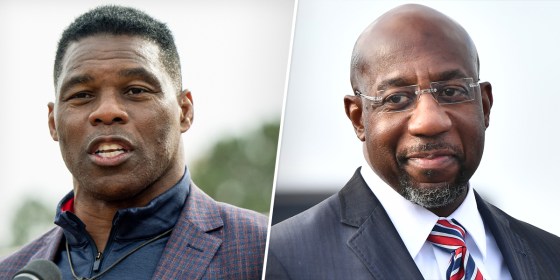
The most recent election for the open senate seat in Georgia is a prime example of how media can influence voters. Political advertisements can be a useful strategy for adversaries in painting their opponents in a particular light. This race was interesting because there is some baggage with both candidates. This seems to be particularly true for Walker, who has had to embrace some of his struggles from the past. Media can even influence how candidates respond to their opponents or how they craft their messaging before. Herschel Walker has embraced being a champion for mental health. His struggles with mental health have been highlighted by the Warnock campaign ads as a way to disqualify Walker from being fit to serve. On the other hand, Walker has attacked Warnock's lack of bipartisanship stating that Senator Warnock has "voted with Biden 96% of the time". Senator Warnock has fought to try and demonstrate the ways that he has worked across the aisle. The messaging by both of theses campaigns is a result of the media that has been displayed about them. I would be interested to hear your thoughts?


Friday, November 18, 2022

The Evolution of Political Advertising


     Political advertising in the United States has been around since our inception. From Andrew Jackson's mobilization efforts to William Henry Harrison's log cabin campaign, campaign slogans and advertising have been used in a variety of ways. As technology has progressed, so has the ability to disseminate information. While this is can be good, we increasingly see the dangers of it. President Trump transformed the media to fit his presidency to produce emotional reactions from both his base and his opponents. The hope was that he would receive more positive emotional reactions than negatives. 

    Trump used to brag about the engagement that media got because of him. Even the news outlets that did not like him were getting more interaction. Is this actually a good thing? I don't believe that success is measured by media engagement in this instance. Voters want to be informed on issues and current events, not on who called who a bad name. The media transformed to Trump and then they realized that they do better financially when they are getting more emotional reactions. 

    The transformation of media can also be seen in the amount of digital ads. In 2017, campaigns spent about $500 million nationwide for political ads. The 2022 midterms were projected to be in excess of $9 billion. We have gotten here because money has driven the media, and politicians are driven by voters. As politicians try to get votes, they have found success in using fear to trigger reactions that scare people to the polls. Instead of showing voter the "One shining hill" (Reagan), we are now voting against issues more than for issues. 

Monday, November 14, 2022

Free Speech and the Struggle for Truth in Political Advertising


    Today's election cycles are filled with thousands of political ads across the country. Political ads target your emotions and try to get a positive or negative emotion out of you that you will carry to the polls. The best thing you can do is not make up your mind about candidates based on political ads Increasingly, questions arise about the validity of these ads. What can be said? Are there regulations? Can you get in trouble for lying?

    The reality is that just about anything goes. There is the risk of a defamation lawsuit but it won't be settle til after the election and usually those are not worth fighting. You can lie all you want. The voters are tasked with reading between the lines and sifting through the politics to find the truth. Each side yells at the other claiming that they lie, cheat, and steal. Both sides do some of each and mix in just enough truth to stick. How did we get here? Stay tuned for an explanation in next week's post. 


Tuesday, September 27, 2022

The impact of negativity

 As we learn about how social media impacts candidates, a lot of people assume that negative media is something that always hurts candidates. In reality, there are many scenarios where this is not the case and it can have no impact at all. In particular, the 2016 presidential election comes to mind. Weeks before the election a tape was released where Donald Trump spoke (NSFW) about the perks of being a star and how he can do whatever he wants to women. The comments made sparked an outrage by many and a lot of people though that it may cost him the election. Another example that comes to mind is former President George W. Bush. President bush was arrested for a DUI. He was asked about it days before the election and had to confirm the accuracy of the story. Both of these candidates went on to win their respective open seat elections and become president. Time and time again it is seen that the baggage of politicians often doesn't matter as much as many people think that it does. It may influence some voters but ultimately it motivates the party from which they claim to get out even more. They feel as if their candidates are being attacked and they need to make sure that they get out and vote. It will be interesting to see the decades to come. Smartphones have changed the political game. They cannot hide their misdeeds like they once could and it will be interesting to see how that impacts candidates. 

Sunday, September 25, 2022

The Cost of Social Media

 For campaigns, the cost of using social media is very expensive. Stacey Abrams campaign has been spending a million dollars a week since July of TV advertising and social media use. Michael Bloomberg spent more than one billion dollars on his presidential campaign with over 70% of that used towards advertising. That is over 700 millions dollars. Buying TV time and promoting candidates through social media can cost an arm and a leg. My question is, should the FEC regulate how much can be spent? Or is that the new norm that we should accept? As this article highlights, it is extremely expensive to run for public office. The amount of money that it takes is limiting to the everyday citizen considering public office. Most of us would have a difficult time garnering the support to start a movement and that comes down to lack of funds. Unless you parents are worth millions or you are connected with some wealthy people, your chances of running for federal office and winning are low. I think this points to why some candidates are willing to do and say whatever it takes to raise money. Marjorie Greene is a prime example. She raises a lot of money around the country by saying what certain groups of voters want to hear. She has a archest that makes her nearly untouchable in her district. Campaigns were already very expensive. As we see campaigns shifting more and more the use of social media, the costs do not diminish but rather increase. This makes it difficult for people to pull the trigger on running for office. 

Friday, September 23, 2022

Misinformation Campaigns

 Like anything, social media can be used in a negative way for political campaigns. After all, campaigns are all about mobilizing groups to vote for you. Could our candidates use media to mobilize voter based on false information? Absolutely. What comes to mind for me is Donald Trump use of his twitter and his allies use of information. The Q movement gained some traction and every one of them were Trump voters. Trump never discouraged this misinformation nor disputed their "reality". He let the misinformation spread to the point that it became a problem. The amount of misinformation spilled over to the 2020 election. Those followers believed everything that President Trump said. We should always be willing to call a spade a spade, especially when it comes to what our politicians are spewing out. Trump told his base and the country for months that the 2020 election was set to be ripe with fraud and that he was going to win by a landslide. This narrative was engrained in the minds of his radical followers. When the election did not go as he wanted, he knew that he would be able to dispute it and have some support from his extreme followers. Misinformation was the reason that Trump thought he could subvert democracy. I hope that is was a wakeup call to all Americans that we need to be careful what we read and believe. 


Friday, September 9, 2022

What makes Media so useful for campaigns?

 Social media has seen a rapid growth in usage over the past several election cycles. It is still kind of "new" but has been shown to be incredibly effective. Social media is a useful tool for businesses and campaigns alike. How is this and why is using social media so important in the modern campaign? There are four key reasons that this is so important. First, it increases name recognition. This is especially important for primary elections. When there are several candidates for a seat in a primary election, voters typically subconsciously pick the one that they are most familiar with. A prime example of this is Herschel Walker's primary win. He breezed through the primary and didn't;t even do debates. His name recognition and Georgia football legend status carried him a long way. The reason you see so many political yard signs is because the name recognition game is important to win. Media also improves your chances to convert voters. Repetitive television advertisements can give the voters more of reason to vote for the candidate. It engrains the message in the minds of voters and gives them a candidate to consider. Another benefit is the cost effectiveness of mobilizing voters. Running a political campaign is extremely expensive. Social media allows campaigns to spend their funds in a cost effective manners by targeting voters. Cultural issues and norms have become a prevalent way for candidates to do this. Lastly, social media can be used as an informative tool for campaigns. Informing the voters of issues and how a candidate will remedy said issues is an important aspect of running for office. Social media allows candidate to do this and for the message to reach a lot more people. Political campaigns are all about reaching voters and getting them to turn out. Media plays a huge role in this. 

Friday, September 2, 2022

Targeted Advertising

 As we are seeing now, campaigns are spending a lot of money on TV Advertising. We are especially seeing advertisements for the senate and governors races. At times, you will see advertisements all the way down at the local level. You may not think about it, but chances are that you are getting more advertisements from one side than the other. This is because of targeted advertising. You know how your phone always asks if it's okay tp use cookies or it's okay that an app or website tracks you? That information is sold and used to better advertise for you. Have you ever been talking about shoes, golf clubs, or some earrings and next thing you know you have all sorts of advertisements on your phone or computer? This strategy also applies to politics and they love it. Having so much data on us helps campaigns know our tendencies and be able to target us. Our own hobbies are being used to identify us to try and earn our vote. Social media continues to be a useful resource for political campaigns.

Monday, August 29, 2022

The rise of Social Media

The last couple decades have seen a rapid increase in how media is used in elections. I want to focus today's blog on a particular issue in media and elections. The 2020 election showed just how important it is to reach voters through social media. President Joe Biden ran a campaign in which he was not out and about to the level that many previous presidential winners were. Instead, his campaign focused on reaching voters through social media such as Twitter and Facebook  Often, no news is the best news but this is not the case when candidates are running for election. It is imperative that they use the media to get their message out. So much of campaign resources are focused on getting the electorate to turn out and vote for the candidate. This often looks like running advertisements on television or on social media. Recently, we have seen in increase in the use of social media and less newspapers being used. These ads can be targeted to the very individual based on their preferences. The level that campaigns can target voters is quite fascinating and has been accentuated through the development of technology. Tune in for next week as we discuss how negative and positive news impacts candidates.


Generational Gap

          Media usage continues to increase while the forms of media are ever changing and increasingly advanced. I think it is interesting ...